Nashik Baptist Church

  • Home
  • Welcome
    • Our Pastor
  • What We Believe
    • The Gospel
    • Church Covenant
  • Sermons
    • Scripture
    • Series
    • Speaker
    • Topics
    • View All
  • Alethia Bookshop
  • Ministry
    • Ladies Ministry
    • Slum Ministry
    • English Classes
    • King’s Kids Club
    • Discipleship
    • Sunday School
    • PEBS – Satellite Centre,Nashik
  • Contact Us
  • Free Articles

January 11, 2016 by Pastor Teacher

What is Your Passion?

shells-in-glass-jarHave you ever read John Piper’s book, “Don’t waste your life”? If you are one of the few who have not, you should. In the opening pages he shares a sad, stirring story, of a retired couple. John Piper writes, “I will tell you what a tragedy is. I will show you how to waste your life. Consider this story from the February 1998 Reader’s Digest: A couple ‘took early retirement from their jobs in the Northeast five years ago when he was 59 and she was 51. Now they live in Florida, where they cruise on their 30-foot trawler(boat), play softball and collect shells. . . .’ Picture them before Christ at the great day of judgment: ‘Look, Lord. See my shells.’ That is a tragedy…

God created us to live with a single passion: to joyfully display his supreme excellence in all the spheres of life. The wasted life is the life without this passion. God calls us to pray and think and dream and plan and work not to be made much of, but to make much of him in every part of our lives.”

Most people, especially young Christian people, slip by in life without a passion for God. That’s not to say they don’t have passion, but mostly, that passion is for worldly things like, music, movies, television, friends, family, sex, food, studies, computers, cars, bikes etc, and sadly spend their lives on insignificant pastimes, living for comfort and pleasure, and perhaps trying to avoid sin. To often we get caught up in a life that counts for nothing and end up wasting our lives. If you are born again (a true Christian who has repented of their sins and embraced Christ in faith) and believe that to live is Christ and to die is gain, then our lives have to make an impact for the glory of God. Do you live and die boasting in the cross of Christ and make the glory of God your singular passion?

Jesus said to His disciples in John 4:34 “…My meat is to do the will of him that sent me, and to accomplish his work.” In this passage, after a long day with Jesus, the disciples leave him at a well, to go find some dinner in the city of Samaria. When they arrive back with the food, Jesus says “No thanks, I am full. I’ve been eating. My food is to do the will of my Father and to accomplish his work. I just spent the last half hour talking to a Samaritan woman about her need for salvation. And I’ll tell you, brothers, I am full.

Jesus Christ had wrestled with the soul of a prostitute and brought her to saving faith in Himself, that was such an exalting joy to Him that He could say it’s like food and drink. My weariness is gone. My thirst is gone. My hunger is gone. I’m satisfied. My food is to do the will of Him that sent Me and to finish His work.” What did He feast on? The will of God. Our Lords’ passion was to make the glory of God real in the lives of people he met – yes, even prostitutes. To reconcile people to His Heavenly Father through his sacrificial work he would perform for them on the cross of Calvary.

All through the gospel of John, Jesus says, “For I came down from heaven not to do Mine own will, but the will of Him that sent Me.” John 6:38. In John 8:29 “And He that sent Me is with Me, the Father hath not left Me alone for I do always those things that please Him.” In John 10:18, He says, “I’m laying down My life of Myself, I have the power to lay it down, and take it up, this commandment have I received of My Father.” Then He climaxes it in John 17:4 when He is on the cross and says to the Father, “I have finished the work which Thou gavest Me to do.”

You know what occupied the whole life of Jesus Christ? The will of God. God’s will in His life. And you know, He’s a great example to us of what our lives should be, isn’t He? Our lives should be the will of God, constantly never ending, always doing the will of God.

Before Jesus ascended into heaven for the last time he left his disciples a command which we call the Great Commission. Matthew 28:18-20 “And Jesus came to them and spake unto them, saying, All authority hath been given unto me in heaven and on earth. Go ye therefore, and make disciples of all the nations, baptizing them into the name of the Father and of the Son and of the Holy Spirit: teaching them to observe all things whatsoever I commanded you: and lo, I am with you always, even unto the end of the world.”

What do you feast on? When last did you share the gospel with somebody? When last did you share with an unbeliever about the wonderful saving work that Jesus has accomplished in your life? Is it wonderful to you? Do you cherish and love the gospel? Are you thankful for what Christ has done in your life, or does music, movies, television, friends, family, sex, food, studies, computers, cars, bikes etc, take the first position in your life? Would you rather talk about these things, than Jesus Christ? Are you ashamed of the gospel and of Jesus?

Let me finish with a true story about Mahatma Gandhi, from his book, “My experiments with Truth”. He says, while in South Africa, “I came in contact with another Christian family. At their suggestion I attended the Wesleyan Church every Sunday. For these days I also had their standing invitation to dinner. The church did not make a favourable impression on me. The sermons seemed to me uninspiring. The congregation did not strike me as being particularly religious. They were not an assembly of devout souls, they appeared rather to be worldly –minded people, going to church for recreation and in conformity to custom. Here at times, I would involuntarily doze. I was ashamed, but some of my neighbours, who were in no better case, lightened the shame. I could not go on like this, and soon gave up attending the service.”

What a shame. What a tragedy. What a difference it would have made if the Mahatma went to a church full of passion for Christ instead of a nominal church. Suppose someone from that church had taken the time to share the wonderful gospel of Jesus Christ to Mahatma Gandhi, can you imagine what an impact that would have had on India, for the glory of God?

We need to ask the hard questions – how many of our own churches in India are full of “un-devouted souls and worldly minded people”? How many of us go to church for recreation and because of custom or tradition? How many so-called ‘Christians’ have no passion for God or little interest in pursuing His will for their lives? How many of us are simply religious and have no relationship with Jesus? How many of us church going Christians will stand before our creator at the judgement seat of God after our life on this earth and say “Look, Lord. See my shells”, or “Look, Lord at my DVD collection”, or “Look, Lord at how much RAM my computer has”?

Hebrews 9:27 tells us “And as it is appointed unto men once to die, but after this the judgment”. Jesus said in Matthew 10:33 “..whosoever shall deny me before men, him will I also deny before my Father who is in heaven.”. We have one life to live, let us not waste it. Let us make much of Christ in every sphere of our life. Let our food be to do the will of God our father. Let us use every opportunity we have to share the wonderful Saviour, who died for our sins, (that we should have paid for) so we could enjoy eternal life in heaven with Him-our resurrected Lord. Let us live to hear Jesus say ‘Well done my good and faithful servant.”

Filed Under: Articles Tagged With: denying Christ, faith, glory of God, gospel, Great Commission, will of God

October 15, 2015 by Pastor Teacher

Jesus, Asceticism & the Prosperity Gospel.

asceticWhen the word “asceticism” is mentioned, what comes to your mind? If you live in Asia or ever visited, you may have images of Buddhist monks or even Hindu sadhu’s living a sort of frugal lifestyle. The east unlike the west probably has a better understanding of this concept, because in many ways it has been accepted as an alternate lifestyle.

V. Jayaram says the following about asceticism. “Traditionally, asceticism has been the recognised and widely approved means in Hinduism to achieve freedom (liberation). Even today it is the most effective and prescribed path for those who want to escape from the cycle of births and deaths. Ascetic traditions played an important role in the development of Hinduism and its spiritual knowledge. It is the heart and soul of Hinduism.” (www.hinduwebsite.com)

Asceticism means, according to Websters Online Dictionary: – practicing strict self-denial as a measure of personal and especially spiritual discipline.

Jesus was an ascetic. While Jesus was on this earth, he challenged his followers to deny themselves and not to store treasures for themselves here on this earth. Jesus said in Luke 9:58 “Foxes have holes, and birds of the air have nests, but the Son of Man has nowhere to lay his head.”

Unlike Hinduism, Jesus does not advocate asceticism as a path to salvation as a way to find peace and salvation. But Jesus does promote asceticism as a way to protect our hearts from being captured by the love of this world (materialism). In Luke 9 (mentioned above) Christ is calling his disciples to treasure Him more than any other thing, person or relationship that this material world has to offer.

Anything we want, desire more than God, anything we rely on more that God, anything we look to for greater fulfillment than God, is in essence an idol. Christ is not in the businesses of sharing His glory. He will not tolerate hypocritical worship, and that is why He challenges his followers to make sure they count the costs, before they give themselves to Him. He wants disciples whose hearts are not divided. “Before you say you’re going to follow Me, make sure you know what that involves!”

So why then is this concept of Asceticism such a foreign, maybe even a shocking thought to so many professing believers? Did Jesus not clearly say that, “If any man come after Me, let him deny himself?”

Based on my experience, I think what it comes down to, is the question, what’s in it for me? Sadly many considering Christianity, often think what they can get out of this religion, especially in India where the reputation of rice Christian abounds.  And that is why the prosperity gospel is so dangerous, because it entertains and feeds off this very selfish man centered attitude. The “prosperity gospel” teaches the very opposite that Jesus taught. It is a self-serving doctrine, rather than a self-denying lifestyle. This heresy teaches that God wants believers to be physically healthy, materially wealthy, and personally happy. Christians are further encouraged to focus on the blessings you want from God instead of focusing on God Himself.  The blessings you’re hoping for become idols in your life, drawing your attention and worship away from God the Creator and toward your own desires – created things.

Instead of stressing the importance of wealth, the Bible warns against pursuing it. Believers, especially leaders in the church (1 Timothy 3:3), are to be free from the love of money (Hebrews 13:5). Jesus warned, “Watch out! Be on your guard against all kinds of greed; a man’s life does not consist in the abundance of his possessions” (Luke 12:15). In sharp contrast to the Prosperity preachers emphasis on gaining money and possessions in this life, Jesus said, “Do not store up for yourselves treasures on earth, where moth and rust destroy, and where thieves break in and steal” (Matthew 6:19). The irreconcilable contradictions between prosperity teaching and the gospel of our Lord Jesus Christ is best summed up in the words of Jesus in Matthew 6:24, “You cannot serve both God and mammon.”

prosperitygospelThe word mammon comes from a Syrian deity, god of riches. If we were to contextualize this verse, we could say “You cannot serve both God and Mahalaxmi.” Lakshmi is the Hindu goddess of wealth, fortune, and prosperity. Professing Christians would balk at the suggestion of worshiping God and a Hindu deity, but in reality under the guise of faith, so many churches today encourage their followers to pray to this created deity, even demand material blessings from this man made god of wealth.  God has been reduced to a good luck charm, a spiritual genie we pray to when we want prosperity.

Creflo Dollar writes, “When we pray, believing that we have already received what we are praying, God has no choice but to make our prayers come to pass. . . . It is a key to getting results as a Christian.” The key to getting results as a Christian is by fearing God and keeping His commandments, by denying ourselves, taking up our cross and following Him, not by some special “mantra” or formula we use to “speak into existence a better reality”. The prosperity gospel teaches prayer is a tool to force God to grant your desires. Man—not God—becomes the focal point of prayer. This is not Christian, Hindu maybe, but certainly not biblical Christianity.

The pursuit of wealth is a dangerous path for Christians and one which God warns about: “For the love of money is a root of all kinds of evil. Some people, eager for money, have wandered from the faith and pierced themselves with many griefs” (1 Tim 6v. 10). If riches were a reasonable goal for the godly, Jesus would have pursued it. But He did not, instead he taught about self-denial, not self-satisfaction.

Simply put, this “prosperity gospel” is nothing more than a satanic philosophy designed to keep us worshiping created things rather than the Creator. The true gospel teaches that following Christ faithfully, means there is a crown at the end, but there’s a cross on the way. Self-Denial and persecution. The gospel is not about what’s in it for me or what do I get when I get Jesus, it’s about being willing to give up everything for the sake of Christ, for the sake of the gospel. Ask yourselves one simple question: “Is Jesus my treasure?” If He is your treasure then you won’t mind giving up anything and everything else that gets in the way of you worshiping Him supremely. If not, your heart is divided and he is not the treasure He ought to be. Repent of your sin, exalt Him rather than yourself, deny yourself, take up your cross and follow Christ.

The real Gospel demands total devotion and offers complete forgiveness of sins. Jesus died to save us from the judgement of our selfish sins, not so that we can become prosperous. Have you been saved from your sins?

Filed Under: Articles Tagged With: asceticism, disciple of Christ, follow, gospel, Jesus Christ, prosperity theology, self denial, suffering

August 10, 2015 by Pastor Teacher

Suffering: The Problem & Solution.

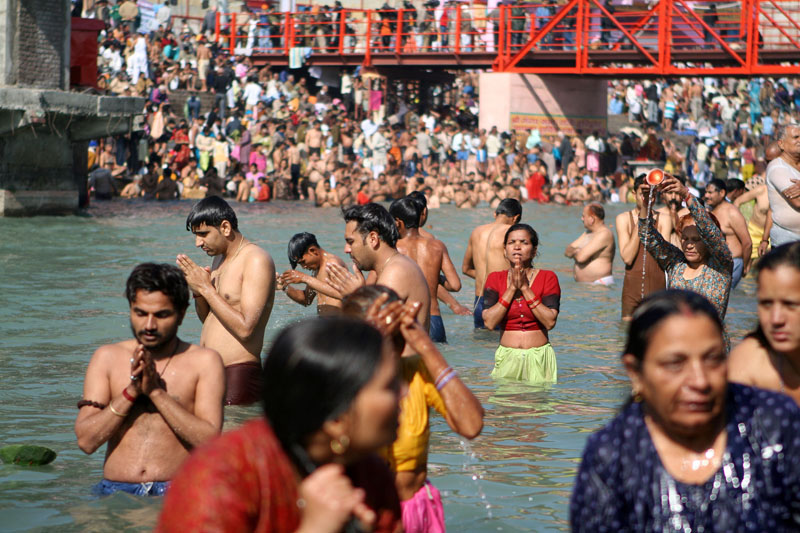
Suffering is a very real and ugly reality. Billions are affected or infected by suffering and looking for light in their darkness. The Hindu festival, called the Kumbh Mela is regarded as the biggest peaceful gathering in all of the world. As many as 75 million devotees are expected to gather in Nashik, in the next couple of months to dip themselves in the Godavari River and “liberate” themselves from all the “miseries and sufferings of life”. I believe one of the strongest motivating factors that draws so many people to a cold, dirty river is the  hope of deliverance from all the suffering of this world.

A recent advertisement for the Kumbh Mela reads as follows:

“It is the power of faith that can part a river, move mountains, and endure the hardships that come bundled up for being an integral part of Kumbh Mela, a congregation of millions, gathered together to be freed from the vicious earthly cycle of life and death and move towards a heavenly realm, which knows no suffering or pain.  An eternal life free of “sins” is the promise that comes attached with the magnificent event of Kumbh Mela. It’s a promise to which millions want to be bound with, and it is this promise that has made Kumbh Mela what it is today.”

An eternal life free of sin and suffering is indeed worth pursuing. But how to do this is the “million dollar question”. Hindus view suffering as punishment for “sins” committed in this lifetime or past lives. Individuals’ suffering is all part of good or bad “Karma” that is part of a cosmic cycle of birth, life, destruction and rebirth. Hindus believe victims will be reincarnated and may be happier in their next life. Karma is understood within Hinduism—and Buddhism and Jainism as well—as the fundamental and universal law of cause and effect. They believe when a person does something, it has an effect: good actions have good effects, bad actions have bad effects.

All these bits of karma—good and bad—are something like spiritual baggage, or deposits in a spiritual bank account. When a person dies, all of his or her karma is, in a sense, added up. They believe a “positive balance” leads to a more positive rebirth; a “negative balance” leads to a more negative rebirth.

Similar to Hinduism, Buddhists believe suffering to be the result of bad karma, not a fallen world. The recognition of suffering in the world is the first noble truth of Buddhism, and has one of the most radical systems of self deliverance from suffering. Suicide is even an acceptable form of “transcending” this suffering.

Jains view the world in which we live to be full of misery and suffering and the souls enslaved to matter. Jains use the presence of evil as a reason for denying the existence of an omnipotent, holy Creator. Jains worship themselves because they believe they have achieved perfection, and have become liberated from the cycle of birth and death. Contrary to the teaching of total depravity, they believe anyone can become a ‘god’ because every being has the potential to become such a perfect soul.

The very word “Islam” means “submission.” Many Muslims understand that to include suffering, is a way of submitting to the will of Allah. Some suffering is Satan’s doing or is the work of his associates in the spirit world (the “jinn”) and is allowed by Allah as a test of humility and faith. Many Muslims believe suffering and adversity strengthen one’s faith, as pain often leads to repentance and prayer and good deeds. Free will and human responsibility which the bible teaches is not embraced.

Just like these other religions, Christianity recognizes suffering in this world. Pain and suffering entered the world when Satan brought sin into the Garden of Eden, not because of bad “karma”. (Genesis 3:17-19). The Bible makes it abundantly clear that all of us are tainted by and infected with sin and its curse of suffering (Rom 3:23; 1 John 1:8). But contrary to what the Buddhist, Jains, Muslims and Hindus believe, the Bible teaches salvation in this corrupt physical and temporary world only comes through having a “saving relationship” with Jesus Christ, who died on the cross for our sins, to restore humanity.

20100131150307_img_4666

Unlike Buddhism, Hinduisms, Islam, and Jainism which depends on the works of the individual for salvation from this curse, salvation in Christianity is dependent on the work of Christ alone not human charity or effort (Romans 3:23-26). By putting faith in Jesus Christ, our account of sin and suffering is transferred to His work on the cross. By His death, Jesus paid for our sins; he took our suffering upon himself, to purchase our redemption with His blood.  Salvation is a gift from God to humanity; a person cannot “attain” their own salvation (Ephesians 2:8-10).

For now, everyone suffers and dies. The Buddha taught his followers to escape suffering while Jesus showed us the way to go through it. Contrary to all other religions, the hope the Bible gives, is not escape or deliverance from suffering, but rather victory over suffering. “Who shall separate us from the love of Christ? Shall tribulation, or distress, or persecution, or famine, or nakedness, or danger, or sword?” (Romans 8:35). The answer is nobody and nothing. “In all these things [Christians] are more than conquerors” (Romans 8:37). The cross of Christ calls us to suffer and secures our triumph. The victory won by Jesus through his death and resurrection is given in the Bible as the guarantee of his final triumph, when he will judge the world and usher in “a new heaven and a new earth, the home of righteousness” (2 Peter 3:13). In that day “He will wipe every tear from their eyes. There will be no more death or mourning or crying or pain, for the old order of things has passed away” (Revelation 21:4).

Dietrich Bonhoeffer, executed by the Nazis for his stand against Hitler, wrote from prison, “In view of our supreme purpose, the present difficulties and disappointments seem trivial.”

The Bible teaches that suffering can only be ended by coming into a right relationship with God, and this can only be done through Jesus Christ. Suffering ends because it is faced with God’s strength and comfort here in this world, and it ends ultimately when one enters Heaven after death. Suffering is certain. Salvation is sure.

To know more, please contact us or click on this link…

Filed Under: Articles Tagged With: Buddhists, Christ, dipping, Godavari river, Hindus, Jainism, Kumbh Mela, moksha, Muslim, Nashik, Ressurrection, suffering, Victorious

July 17, 2015 by Pastor Teacher

The Power & Pretence of Faith

One of India’s biggest Hindu festivals, Kumbh Mela, began on Tuesday morning here in Nashik. The last Kumbh Mela in Nashik saw 7,5 crore (75 million) pilgrims and sadhus travel to Nashik to take a holy dip in the sacred Godavari River. This Kumbh Mela is the most sacred of all the Hindu pilgrimages and is regarded as more auspicious than the annual Diwali and Holi festivals. They believe that dipping themselves in this river will wash a person clean from all their sins and recognise this Kumbh Mela to be a “golden” opportunity to “liberate” themselves from all the “miseries and sufferings of life”.
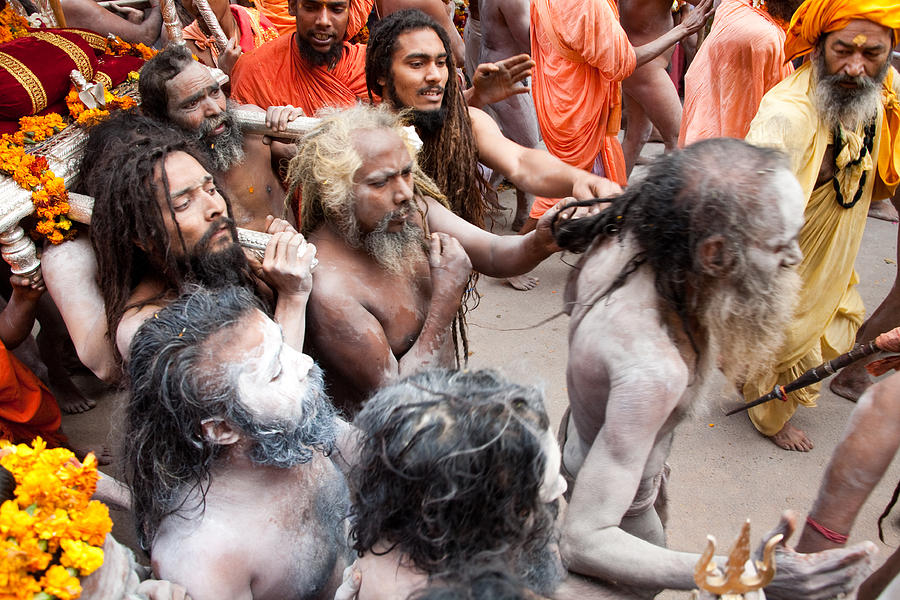
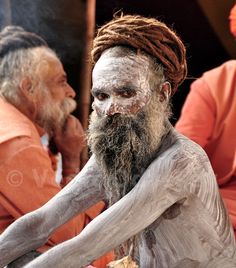
Thousands of holy men and women (sadhus) are seen clad in saffron sheets with Vibhuti ashes dabbed on their skin as prescribed by ancient traditions. Some, called naga sanyasis, may not wear any clothes even in severe winter. The right to be naga, or naked, is considered a sign of separation from the material world. These Sadhus travel to the Kumbh Mela to make themselves available to much of the Hindu public. This allows members of the Hindu public to interact with the Sadhus and to take “darshan” (respectful visual exchange). Pilgrims are able to “seek instruction or advice in their spiritual lives.” Darshan focuses on interaction with a Hindu religious deity and the worshiper believes he is able to visually “‘drink divine power.”

Kumbh Mela is celebrated every third year in four different locations (Nashik being one of the four locations). Nashik hosted their last Kumbh Mela twelve years ago. The pilgrimage is held for about 2 months, when Jupiter and the sun are in the zodiac sign Leo alignment (Simha Rashi). Hinduism teaches that drops of nectar fell from the kumbha(vessel) carried by gods after the sea was churned. One of these drops spilled into the Godavari river making it “divine”. According to Hindu mythologies, the Kumbh Mela is the only time and place in the world where a person can “disburden” his sins and achieve ‘Nirvana’ from the vicious cycle of birth and re-birth. The Hindus believe that by taking a holy dip in the sacred water they will be able to wash away all the sins they have committed in the past and pave way for attainment of Moksha.

After visiting the Kumbh Mela in 1895, Mark Twain wrote, “It is wonderful [scary], the power of a faith like that, that can make multitudes upon multitudes of the old and weak and the young and frail enter without hesitation or complaint upon such incredible journeys and endure the resultant miseries without repining. It is done in love, or it is done in fear; I do not know which it is. No matter what the impulse is, the act born of it is beyond imagination..”

THE POWER OF FAITH

The “power of faith” can indeed be a wonderful as well as a scary experience. Without a doubt these pilgrims coming to the Kumbh Mela have faith. It takes an extra-ordinary faith to believe that your soul has to travel through 8 400 000 species before it reaches a human body. And only once your soul is in a human body, (Hindus believe) can you then start working on your own “karma”(good works) in order to achieve Moksha. As you watch these pilgrims perform these “pujas” and rituals you cannot help yourself but to agree with Mark Twain, that this faith born from this act (or this act born from this faith) is indeed beyond imagination. But, as millions of devotees gather, the question remains, is this type of faith enough? Will all this devotion, sacrifice, good works, self denial, suffering and effort “disburden” our sins and liberate us from the “miseries and sufferings of life”?  If you take poison (thinking its medicine) all the faith in the world (no matter how powerful) won’t bring you back to life. So this question is of eternal significance. The destination of our eternal soul requires us to make the right choice and to have the right type of faith.

Here is what the Bible has to say about faith:

“the righteousness of God through faith in Jesus Christ for all who believe. For there is no distinction: for all have sinned and fall short of the glory of God, and are justified by his grace as a gift, through the redemption that is in Christ Jesus, whom God put forward as a propitiation by his blood, to be received by faith. This was to show God’s righteousness, because in his divine forbearance he had passed over former sins. It was to show his righteousness at the present time, so that he might be just and the justifier of the one who has faith in Jesus. Then what becomes of our boasting? It is excluded. By what kind of law? By a law of works? No, but by the law of faith. For we hold that one is justified by faith apart from works of the law. ” Rom 3:22-28

While many people will try to justify themselves before God on the basis of their religious activity or their good works, the Bible clearly teaches that the only way to come to God is by grace through faith in Jesus Christ alone. The object of our faith is the key. Too often, faith is misunderstood. The New Testament Jews misunderstood it, sending Jesus to his death and so do all other religions, like that of Mahatma Gandhi. Fifteen years before his death, Mahatma Gandhi wrote: “I must tell you in all humility that Hinduism, as I know it, entirely satisfies my soul, fills my whole being, and I find a solace in the Bhagavad and Upanishads.” Just before his death, Gandhi wrote: “My days are numbered. I am not likely to live very long—perhaps a year or a little more. For the first time in fifty years I find myself in the slough of despond. All about me is darkness; I am praying for light.”

Mahatma Gandhi’s faith failed him at the end of his life. He had been searching for light in all the wrong places. He rejected the one and only true light. Jesus said in John 8:12, “I am the light of the world. Whoever follows me will not walk in darkness, but will have the light of life.” Sadly the Mahatma believed that Christ was just another way. His object of faith was in his own works (karma). Even though he believed in and respected Jesus Christ, it was not enough. Even Satan and his demons believe in the true God (James 2:19), but they don’t love and obey Him. Their faith is misplaced and not genuine.

So the question remains, what type of faith do you have? Is your faith in your works (karma)? Ephesians 2:8,9 says “For by grace you have been saved through faith. And this is not your own doing; it is the gift of God, not a result of works, so that no one may boast“. Is your faith a cultural faith dependent on works like the faith of the devotees at the Kumbh Mela. Is your faith in a person, swami, guru, prophet or priest? Or is your faith rooted in family or heritage or a religious ritual like baptism, or even church membership? Is your faith in a profession you made or a covenant you signed? Or is it temporary faith, like the Jews, who turned away from Christ once they understood their need to bow their knee to the Sovereign Lord Jesus Christ? Is it a faith in faith, instead of a faith in the resurrected Christ of God, Jesus of Nazareth?

The “power of faith”, as enchanting as it is, like that of the devotees at the Kumbh Mela does not save, and never will. Only the power of the gospel will save sinners from their sins. The question of salvation is answered in the object of your faith. So I ask you, in whom do you trust and why? Jesus himself said that he is the only source of salvation (John 14:6). Jesus said it clearly: “The one who rejects me rejects him who sent me” (Luke 10:16). People and religions that reject Christ reject God. Do other religions know the true God? Here is the test: Do they reject Jesus as the only Saviour for sinners, who was crucified and raised by God from the dead? If they do reject this, they do not know God in a saving way. According to Jesus any other ‘way’ is not a way at all but a deception; Jesus claims nothing less than exclusive authority and ability to save sinners. (Jn. 14.6; Mat. 7.13-14)

The good news of the gospel is that no one else but Christ died for sinners like us. And he rose physically from the dead to validate the saving power of his death and to open the gates of eternal life and joy (1 Corinthians 15:20). In Christ alone, God extends the perfect blood and righteousness of Jesus as the only suitable payment for our sin, “For he hath made him to be sin for us, who knew no sin; that we might be made the righteousness of God in him.” 2 Corinthians 5:21. Our faith needs to be in the person of Jesus Christ and His work (sacrifice) alone for us and our salvation.

Please contact us or click on this link if you would like to know more…


Filed Under: Articles Tagged With: Christ, Christ alone, cycle, faith, Godavari river, Hindu, Kumbh Mela, moksha, Nashik, nirvana, object of faith, peace, salvation, suffering, works

June 25, 2015 by Pastor Teacher

Demons, Angels & the Corruption of the Gospel.

angels_and_demons_by_crilleb50-d5z2q3cDemons and Angels. Tom Hanks made this title famous by acting out Dan Brown’s fictitious novel by the same name. But even before Hollywood existed, the subject of angels and demons has fascinated people’s imagination, across cultures, continents and even the ages. In our day and age it’s no surprise to observe how movies have influenced and shaped many Christian’s strange ideas and views on demons, angels and the gospel.

Sadly we live in a time where there is more attention and focus on “Deliverance” ministries than the Gospel Ministry, so much so you can even go to a “bible” college and earn a diploma in ‘Casting out Demons”.

In the first Century New Testament Church, it seems there was this familiar, unhealthy, excessive and inappropriate preoccupation with angels and their involvement in human life. The Apostle Paul warned the Colossian Church; “Let no man beguile you of your reward in a voluntary humility and worshipping of angels” Colossians 2:18. The word beguile means to “defraud”. There were false teachers that were trying to defraud or “cheat” the believers of their reward. These spiritual snobs were suggesting that the Christians at Colossae had failed to meet the standards of true discipleship and were therefore spiritually disqualified. They would teach that in order to be spiritual you had to add works, your own efforts, and your own experiences, your visions, worship of angels plus Christ.  These false teachers were basically teaching that Christ was not enough.

This heresy has plagued the church for centuries. This teaching became known as Gnosticism.  The heresy teaches that to become a Christian you have to have a greater, higher knowledge and a deeper experience with God that comes through a knowledge of various means. Sounds familiar doesn’t it? This heresy is alive and well in so many supposedly “evangelical” churches today. The only way Satan can counterfeit grace is with works, and that is why heretics teach Christ plus works righteousness. Paul says in Galatians 5, if you have Christ plus anything, you lose Christ.

Dangers of the “Deliverance Ministry”.

What a better way to distract people from the ministry of the gospel than with a “deliverance ministry”. Nowhere in the bible are we commanded to caste out demons (we are however commanded to make disciples!). In the gospels we see Jesus and his disciples casting out demons, but that was a unique time never to be repeated again. These gifts the apostles had were for a limited time to validate their ministry and their authority (cf. Mark 16:17-18; Acts 2:43; 5:12, 15; 14:3; 15:12; 19:11; 2 Cor 12:12).What most Pentecostals fail to understand is that when the apostles died their special supernatural gifts died with them. With the completion of the canon of Scripture these miraculous gifts ceased.

I suspect, especially in India, people are intimidated by these mystics and think that in order to know and enjoy God, they need to have their own fantastical visions and supernatural experiences that most charismatics claim to have had. I have been told on a number of occasions that a “true” Christian has to experience speaking in tongues as proof that he is really saved. That is nothing more than spiritual intimidation. Even though it may sound biblical, it is not. Paul said in 1 Corinthians 14:22 that “tongues are a sign not for believers but for unbelievers”.

Biblical Christianity has always taught that true Christians have nothing whatsoever to fear from the Devil or his demons except deception and temptation. Too many well intentioned believers are deceived by the devil through this mystical gnostic heresy. This is why Christians are commanded to be equipped (Ephesians 4:12) with the word of God so that we will “build up the body of Christ” rather than breaking it down by all these strange mystical doctrines. The devil’s tactics have not changed much. These mystical false teachers were (and still are) agents of the devil trying to intimidate people into believing lies. They cunningly prey on immature Christians who are easily tossed to and fro by these supernatural doctrines. Don’t be deceived, the spread of these false doctrines are a deliberate attempt to destroy the Church of God.

Satan, an instrument in God’s sovereign omnipotent hand.

But what about all these stories of exorcism and accounts of deliverances and healings that we hear about? Are they all fake, are we to ignore all of them? In my opinion it is proof of the power of lies and deceit. We are warned that even apparent angelic appearances can be false, “And no marvel; for Satan himself is transformed into an angel of light.” 2 Corinthians 11:14.

God says in Deuteronomy 13v1-3 “If a prophet or a dreamer of dreams arises among you and gives you a sign or a wonder, and the sign or wonder that he tells you comes to pass, and if he says, ‘Let us go after other gods,’ which you have not known, ‘and let us serve them,’ you shall not listen to the words of that prophet or that dreamer of dreams. For the LORD your God is testing you, to know whether you love the LORD your God with all your heart and with all your soul.” God states clearly that false prophets are allowed by Him, to test us to see if we are loyal to His word, to see if we really love Him or if we are willing to be swept away by every wind of doctrine.

Is it not interesting that these false prophets indeed have powers? Their signs and wonders were coming to pass. But their intentions are to lead people away from God, not towards Him. Don’t believe everything you see just because it’s on Christian television or radio.  Just because it’s in a book on a shelf doesn’t make it true.  Just because you find it on the internet, doesn’t mean it’s biblical! Paul warned us about listening to ‘another gospel’ or worshipping ‘another Jesus.’  Satan is all about counterfeiting!

The thing that really matters is to get over your fear of demons and stop being intimidated by these false teachers. Charismania preaches a world where the Devil reigns and a weak, useless God stands on the side-lines hoping we will help Him out a bit. The reality is different, the Devil is a tool in God’s hands, and the Bible is clear he can do nothing without His permission. Martin Luther called Satan “God’s Ape.” Compared to the all-powerful God who protects us demons are nothing, and not worthy of a fraction of the un-due attention we give them.

True believers are more than conquerors through Christ.  We have a power source greater than Satan and his angels. I John 4:4 “Greater is He that is in us, than he that is in the world…” We can stand against Satan clothed in the armour of God.  [Eph. 6]

Does God determine the outcome of world history or is the outcome determined by humans, angels and demons?

How you answer that question reveals more about you than you probably understand. If you said God needs humans, angels and demons then you have not grasped the sovereignty of God and the sufficiency of Christ. God does not depend on our spiritual warfare techniques and our knowledge of the supernatural in order to conquer. God has already conquered through the gospel of Jesus Christ, by sending His only beloved Son, who would deliver us from the power of Satan by giving His life as a ransom for our sins, and resurrecting on the third day to prove His victory over death, once and for all.

The key issue is not our knowledge about angels and the forces of evil but our knowledge of God through the gospel. Those who believe are “saved to the utmost” (Hebrews 7:25) and need not fear the spiritual forces of darkness. God uses the gospel to deliver people from the darkness of this world. The gospel effectively accomplishes all God intended to do from all eternity to save sinners. The means of grace provided in the Bible are sufficient to give us freedom and growth in the grace and knowledge of the Lord.

Don’t be beguiled by the worship of angels. The very gospel is at stake. The basic truth of Christianity is Christ.  Christ is sufficient. Christ is all. We don’t need to be delivered from demons, we need to be delivered from sin. Christ has come to save us from our sins! Have you been delivered?

Filed Under: Articles Tagged With: angels, Christ, deliverance, demons, gnosticism, gospel, Jesus, victor

  • « Previous Page
  • 1
  • 2
  • 3
  • Next Page »
"For the word of God and the testimony of Jesus Christ."

Pray for the Unreached

christian books


Advertisement image

Daily Verse

Stand in awe, and sin not: commune with your own heart upon your bed, and be still. Selah. — Psalm 4:4 (KJV)

Recent Sermons

  • The Day of Judgement
    Nilesh Hiwale, July 7, 2024
  • The Battle of Armageddon!
    Nilesh Hiwale, June 30, 2024
  • The Millennium- Part 3.
    Nilesh Hiwale, June 23, 2024
  • The Millennium- Part 2.
    Nilesh Hiwale, June 16, 2024
  • The Millennium – Part 1.
    Nilesh Hiwale, June 9, 2024
  • Reformation Day
    Sameer Salve, October 31, 2023

Visitors

  • Alethia Bookshop
  • Ministry
  • Contact Us

Copyright © 2025 · Executive Pro Theme on Genesis Framework · WordPress · Log in