 Suppose you were caught for stealing money from a bank and had to appear before a judge in a court of law for the sentencing of your crime. As you approach the judge’s bench you realize that you know the judge as a good friend of your father. You start to appeal to the judge for mercy. You say to him “Uncle, remember me, you know my father! You even came to my 11thbirthday celebration. Please uncle, I know you are a good man, please would you forgive me and let me go free?”
Do you think the judge would say “Yes, you are free to go”? No, of course not, he would have to follow the course of justice if he was a good judge. He would have to punish you for your crime, as the law of the country dictates. Or suppose you were the victim of a terrible crime, and the criminal was allowed to go free, without any punishment or retribution. What would you say? What would your family say? There would be an outcry for justice.
This illustration is no different to the judgment we will all face one day when we all will appear before God (Heb 9:27). Because God is holy He has to punish our sins, we all stand guilty before him, condemned in our sins (Rom3:23). We have all offended a holy God and broken his laws (Exodus20), and justice must be done!
There is great news however for the one who sees God as just when he judges; for while God is eternally holy, righteous and just, he is also eternally loving and forgiving (1 John1:9). In love he provided the only possible means of forgiveness in his son (John3:16). Jesus, himself being God, became a man and lived as a man (John1:14). Jesus obeyed and loved God perfectly in the place of sinners who have never loved or obeyed perfectly.
Further, Jesus went to the cross to stand in the place of rebels as our advocate, to pay the punishment of our sins. Jesus paid the price of our sins in order to serve the justice of God and to demonstrate the love of God (Romans3:25). On the cross, being the eternal son of God, Jesus offered up himself as an eternal sacrifice to God for the sins of rebels (2Cor5:21). On the cross God treated Jesus as if he was judging sinners like us (even though he was sinless), that he might treat sinners like they were perfect like Jesus (even though they were sinful). Jesus paid that penalty for us so that we could be accepted by God.
This forgiveness is not automatic like voting when we are 18 however. It comes by recognizing Jesus as king and ruler over your life. In doing this you turn from rebellion (sin) and turn to Jesus (submission). It is this attitude of submission to Jesus as King and following him as Lord, that characterizes the Christian life and gives God pleasure.
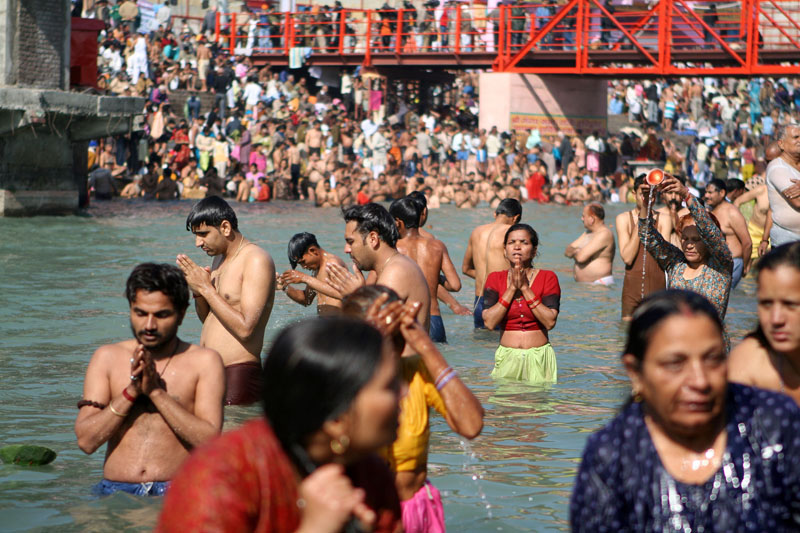 One of India’s biggest Hindu festivals, Kumbh Mela, began on Tuesday morning here in Nashik. The last Kumbh Mela in Nashik saw 7,5 crore (75 million) pilgrims and sadhus travel to Nashik to take a holy dip in the sacred Godavari River. This Kumbh Mela is the most sacred of all the Hindu pilgrimages and is regarded as more auspicious than the annual Diwali and Holi festivals. They believe that dipping themselves in this river will wash a person clean from all their sins and recognise this Kumbh Mela to be a “golden” opportunity to “liberate” themselves from all the “miseries and sufferings of life”.
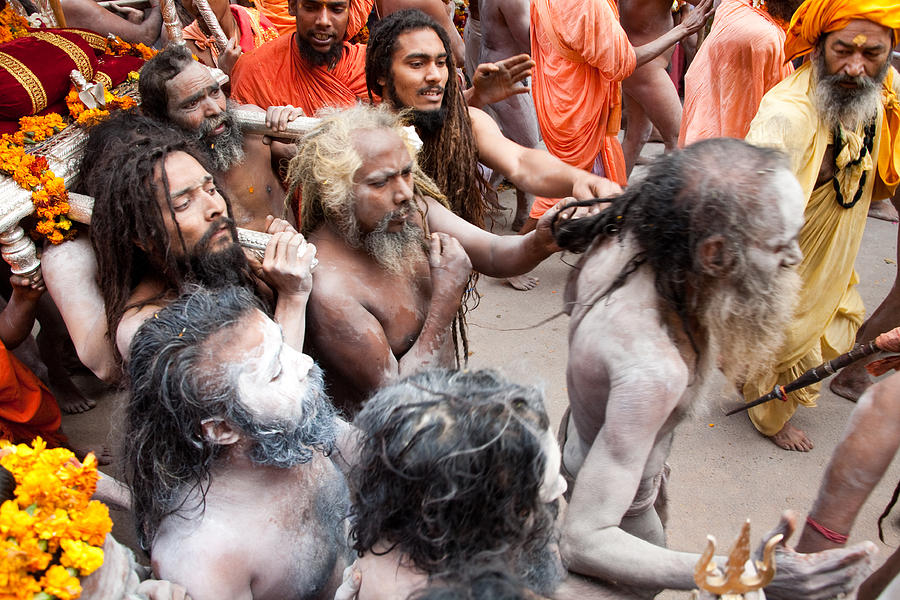 Kumbh Mela is celebrated every third year in four different locations (Nashik being one of the four locations). Nashik hosted their last Kumbh Mela twelve years ago. The pilgrimage is held for about 2 months, when Jupiter and the sun are in the zodiac sign Leo alignment (Simha Rashi). Hinduism teaches that drops of nectar fell from the kumbha(vessel) carried by gods after the sea was churned. One of these drops spilled into the Godavari river making it “divine”. According to Hindu mythologies, the Kumbh Mela is the only time and place in the world where a person can “disburden” his sins and achieve ‘Nirvana’ from the vicious cycle of birth and re-birth. The Hindus believe that by taking a holy dip in the sacred water they will be able to wash away all the sins they have committed in the past and pave way for attainment of Moksha.
 Here is what the Bible has to say about faith: